
Attila Atilla Kiss (1965),
researcher of literature, member of the deKON Group until its cessation, head
of department of the Department of English Studies at the University of Szeged.
His research concentrates on postsemiotics, renaissance and postmodern drama.
In 2000 he founded the Cultural Iconology and Semiography Research Group at the
University of Szeged.
E-mail: kiss_a_m@yahoo.com
- BARKER, Francis, 1984. The Tremulous Private Body: Essays on Subjection. London and New York: Methuen.
- BAYLEY, John, 1981. Shakespeare and Tragedy. London:
Routledge and Kegan Paul. - DESSEN,
A., 1977. Elizabethan Drama and the
Viewer's Eye. University
of North Carolina Press;
1982. Elizabethan Stage Conventions and
Modern Interpreters. University
of North Carolina Press;
1995. Recovering Shakespeare's Theatrical
Vocabulary. Cambridge
University Press. - HILLMAN, David and MAZZIO, Carla, eds. 1997. The Body in Parts: Fantasies of Corporeality
in Early Modern Europe. London and New York: Routledge. - KNIGHT, G. Wilson, 2001. "The Embassy of Death: An
Essay on Hamlet." In: The Wheel of
Fire: Interpretations of Shakespearian Tragedy. London: Routledge, 2001. 17-49. - KOVÁCS, András Bálint, "Gábor Bódy: A Precursor Of the
Digital Age." http://www.nava.hu/download/kab/Body.pdf - MARSHALL, Cynthia, 2002. The Shattering of the Self: Violence, Subjectivity, and Early Modern
Texts. Baltimore
and London: The
Johns Hopkins
UP. - NUNN, Hillary M., 2005. Staging Anatomies. Dissection and Spectacle in Early Stuart Tragedy. Ashgate.
- RUTHROF, Horst, 1977. Semantics and the Body. Meaning from Frege to the Postmodern. Toronto: University of Toronto Press.
- SAWDAY, Jonathan, 1995. The Body Emblazoned: Dissection and the Human Body in Renaissance
Culture. London
and New York:
Routledge. - WEIMANN, Robert, 1978. Shakespeare and the Popular Tradition in the Theater. Baltimore and London: The Johns Hopkins
University Press. - WICKHAM, Glynne, 1963. Early English Stages. 1300 to 1600. Volume Two 1576 to 1660, Part One.
New York: Columbia University Press.
This paper investigates an example of the theater - film interface. Recent studies in mediality have given new impetus to the postsemiotic theories of adaptation and representational logic. Film theories have amply benefited from comparative investigations into the analogies and differences between theatrical and cinematic representational techniques. My focus here is on Shakespearean scholarship and the reinterpretations of the early modern theater, as well as the bearing these new findings had on filmic representation. I intend to establish a connection between the two fields by attempting an analysis of a production of Hamlet by the pioneering figure of experimental Hungarian theater and film, Gábor Bódy. The cultural practice and public spectacle of anatomy will be the example which will connect in my argumentation the early modern and the postmodern, as well as the theatrical and the cinematic. I would like to shed light on how Bódy's work can be interpreted as a peculiar premonition of critical trends that emerged after his experiments.
The theater – film interface has never been more important than today, when studies in mediality give new impetus to the postsemiotic theories of adaptation and representational logic. Film theories have amply benefited from comparative investigations into the analogies and differences between theatrical and cinematic representational techniques. Is it the semi-ritualistic and incorporating totality of theatrical involvement or the agency of the gaze that bears a greater effect on the psychosomatic heterogeneity of the subject-as-spectator? Where does the multimediality of semiosis attain greater efficiency in establishing, problematizing or negating the immediacy of experience? Such interrogations have become common in the study of the relationships between theater and film during the past 20 years, but this critical perspective had been preceded by an important turn in theater studies. My focus here will be on Shakespearean scholarship and the reinterpretations of the early modern theater, as well as the bearing these new findings had on filmic representation. I intend to establish a connection between the two fields by attempting an analysis of a production by the pioneering figure of experimental Hungarian theater and film, Gábor Bódy. The cultural practice and public spectacle of anatomy will be the example which will connect in my argumentation the early modern and the postmodern, as well as the theatrical and the cinematic. I would like to shed light on how Bódy’s work can be interpreted as a peculiar premonition of critical trends that emerged after his productions.
Performance-oriented semiotic approaches have become widespread and diverse in Shakespeare studies since the late 1970s. The word versus image, verbal versus visual debate about the early modern theater took a decisive turn with the canonization of the approaches that investigate the material conditions and the representational logic of the emblematic theater, the semiotic space for which English Renaissance dramas were specifically intended and designed. From Glynne Wickham’s early accounts of the emblematic stage properties [1] to Robert Weimann’s seminal contention about the difference between the platea and the locus of stage representation [2], and Alan Dessen’s attempts to recover Shakespeare’s theatrical vocabulary [3] for the modern spectator, these studies made it indisputable that we need to restore these plays to the original theatrical representational logic. It is on the basis of this logic that the action, the symbolical-iconographical networks of connotations and the emblematic codes can be activated. The representational logic of the stage is crucial in the understanding of any drama, since the dramatic text, as a characteristic feature of the genre itself, hides a significant amount of information, and these blank holes are filled in when the text is directed and actualized in the theatrical production. This actualization is even more crucial in the case of the early modern emblematic theater, where the stage properties, the proximity of the objects, the directionalities all participated in a network of symbolical connotations. We certainly miss a great part of this emblematic polysemy if the contemporary iconographic, theatrical or religious traditions of understanding are not decoded in our reading of the plays, and this decoding inevitably necessitates the observation of the theatrical space as it is implied by the text.
The recent performance oriented approaches have usually taken into consideration the importance of the horizontal dimensionality of the early modern stage, which comprised of the representational place of the locus, and the interactive, liminal space of the platea that functioned as the dimension where the world of theatrical illusion and the world of actual reality melted and fused into one-another, positing questions about the individual autonomy and self-presence of both of these worlds (Weimann 1978, 212). One of the several complex examples of the use of this horizontal dimensionality is when Puck dissolves both the world of the play and the world of the audience in his final dream-casting monologue. Less attention has been paid, however, to the equally important and constitutive vertical dimensionality of the acting space, which inserted each and every early modern play into a cosmic, universal perspective. In this dimensionality, the action and the semioticity of the drama stretched out between the underworld and the high heavens, representing the analogous and vertical world model which was inherited through the medieval origins of the Renaissance theater. The early modern theater itself, grounded in the analogous mode of thinking and the microcosm – macrocosm philosophy, was primarily considered as a huge emblem of cosmic order and universal harmony. The spectators in the Globe theater could feel that they are part of a microcosmic laboratory of the world where they are witnesses to various investigations into comic issues. At the same time, it was exactly because of its primary emblematic meaning of order that the English Renaissance theater could also represent chaos, disharmony and misrule. An often-recurring technique to foreground images of cosmic and social disorder is when the verticality of the theatrical space goes through an inversion. This inversion is a characteristic attribute of the carnivalesque, but it often results in much more than mere topsy-turvydom or disorder. The eruption of sexual energy on May Day or the damaging chaos of „Fair is foul and foul is fair.” are visions of disorder and misrule indeed, but even more spectacular and effective are, I think, those instances when the positionalities in the verticality are inverted, and the metaposition on the top is occupied and usurped by representatives of the bottom, the underworld. The visual verticality of the theater could very powerfully represent such an inversion, which often resulted in an all-embracing tragic irony. The best early example for this vertical inversion is from the prototypical English Renaissance tragedy, Thomas Kyd’s The Spanish Tragedy, where the metaposition of the heavens, from where the unfolding of some providential plan could be expected, is occupied by the Allegory of Revenge and the Ghost of Don Andrea. These two agents of the underworld must have reached their post in the contemporary staging ascending from below, through the trapdoor, probably to one of the balconies above the stage. Thus, representatives of the underworld here are metapositioned on the top – the transcendental position of God is dislocated, but the characters in the play are blind to this. In the intricate network of revenges the characters have to outdo the others in plotting and maneuvering. They are striving to achieve a position higher than all the others, but they are unaware of the fact that the seat of the best revenger, the position which they are fighting for has already been irrevocably occupied.
We find that a similar vertical inversion is constitutive of the world of a great number of other plays, mainly tragedies. In Hamlet, the Ghost is an agent which is active both above and below, leaving no place for a divine transcendental reference point, and this omnipresence of the Ghost is often properly staged in postmodern adaptations as well (e.g., in the stage production of Gábor Bódy which I am going to analyze later). In Titus Andronicus, Aaron emerges from below and later very often possesses the highest metaposition, as it is also powerfully emphasized in Julie Taymor’s postmodern film adaptation, where Aaron is granted the only location of metaperspective upon the entire environment of the film. In The Revenger’s Tragedy, the skull of Gloriana is introduced by Vindice at the beginning of the play as a representative of the underworld, coming back to haunt in the corrupt court, and later, having been ostensively shown and raised above all other things by Vindice, it becomes the all-generating agent of the tragedy. Whenever we read these early modern plays, we need to make an effort to establish an imaginative staging in our interpretation in order to position the action in the semiotic space of the theater. Thus, the initial monologue of Gloucester in Richard III will lose its most important implications if we do not picture him in the position of the Vice, acting as an agent of involvement on the interactive margin of the stage, in continuous and vibrant contact with the spectators. Similarly, Vindice at the beginning of his tragedy is best visualized, again on the basis of contemporary emblematic codes and stage conventions, as an agent of the memento mori tradition who, at the same time, does not simply act out the standard moralizing, but also superimposes the iconographic skull over everything else in the entire world, establishing yet another instance of inversion. The death’s head, recuperated from the grave, the underworld below, achieves a position on top of the world.
Inversion and the ensuing disorder are often represented in English Renaissance tragedy with anatomical precision and through an anatomical imagery. Anatomical attention focuses on the way the human body can be opened up to reveal the secrets of some hitherto unknown reality. The number of studies on the presence and history of anatomy in early modern English culture has been growing since the late 1980s, revealing the close connection between, and the parallel development of the anatomy theater and theatrical playhouse. As Hillary M. Nunn argues in one of the most recent volumes: „In early modern London, public interest in human dissections and playhouse dramas developed nearly simultaneously.” [4] Anatomization in general, however, had a much larger epistemological stake. The entire early modern period is characterized by an expansive inwardness: the term might sound paradoxical, but paradoxicality is a term that befits the age itself. New inventions, discoveries, epistemological frontiers are opened up, but all this is carried out with an intention to penetrate beyond the surface of things, to gain insight into the depth behind the façade of the world, to arrive at some immediacy of experience, at some knowledge in a time of uncertainties. This inwardness is constitutive of the imagery and the dramaturgy of the plays that were designed for the theaters of the time by Shakespeare and his contemporaries. The disruption of harmony and order is investigated in a world where physical and mental wholeness is mutilated, opened up, penetrated and dissected. Limbs and body parts are dispatched on various itineraries, but the all-encompassing inwardness does not only aim at the corporeal level. We are also introduced again and again, as if in a psychic laboratory, into the anatomization of the mental processes as well. Early modern drama employs a double anatomy: a simultaneously corporeal and mental dissection tests the thresholds of meaning, knowledge and identity.
One special instance of this twofold dissection is Shakespeare’s Hamlet, a tragedy of consciousness in which the imagery of dissection actually turns the play into a continuous vivisection of the protagonist. We are witnessing a self-anatomy, full of images of the body, the flesh, decay, corruption, disease, all filtered, processed and magnified through the mind of the early modern subject. Too much has been written about the pervasive presence of the body and the mind in Hamlet for me to enlist the ways in which this presence informs the play. In the book which will be undoubtedly canonized as one of those that solidified the interest in early modern anatomy, Jonathan Sawday points at the move from public autopsy to the more developed form of the public spectacle: the self-dissection of the anatomist. „The science of the body was to become not something to be performed only on dead corpses removed from the execution scaffold, but on the anatomist’s own body.” [5] The self-dissection of the anatomy theater finds its parallel in the twofold self-anatomy of the protagonist in early modern tragedy.
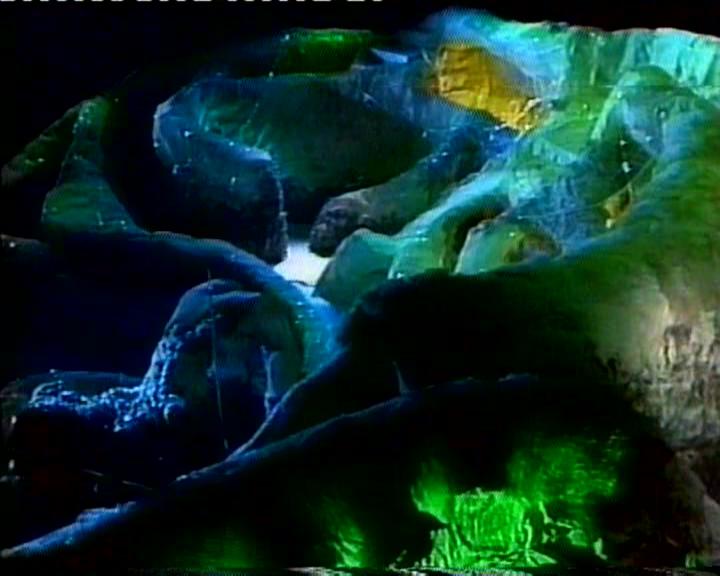
Within the framework of this double anatomy, I would like to dwell on one peculiar postmodern transmediation, a stage and a film adaptation of Shakespeare’s tragedy, directed by a Hungarian postmodern experimental director. Gábor Bódy’s stage production of Hamlet was a groundbreaking endeavor by the pioneering director who renewed Hungarian and East-central European cinematography by the employment of semiotic theory, video technology and a theory of his own about seriality and the attribution of meaning in cinematic productions. Bódy was chiefly an expert and a great innovator in cinematography, but he also worked occasionally for the theater. [6] He directed Hamlet for a theater outside the capital, but not much later the stage performance was used as a basis for a video film produced for the Hungarian public television in 1982. The object of my analysis here is the film version, which is the final product of a series of transmediations, starting from the dramatic text, once designed for an emblematic theatrical space, through the experimental staging to the video technique in which the multimediality of representations reaches its most complex level. In this production of 1982, acting as a harbinger of critical trends yet to come, Gábor Bódy introduces a number of interpretive insights which emerged only after the mid-eighties. Bódy employs the concept of the tragedy of consciousness [7], the cultural and theatrical tradition of anatomy and the idea of self-dissection, and combines them all in an experimental staging of Shakespeare’s play. The central representational technique of his stage production is the spectacle of the entire theatrical space as a huge dissected human brain. The action of the tragedy unfolds within the labyrinthine tunnels and chambers of this brain-stuff, amidst glittering and greasy fibers, nerve-cells and blood vessels. Bódy does not simply foreground the traditional argument that the play might be read and staged as an extended internal monologue, taking place actually inside Hamlet’s troubled mind. He combines this approach with a thematization of the ideas of anatomy, inwardness, materiality and heterogeneity, critical concepts that got into the forefront of Renaissance scholarship by the late eighties. Bringing together the theme of the tragedy of consciousness with the theme of anatomization, Bódy’s production also pays attention to the representational technique of inversion, carefully positioning the actors and the symbolical properties on Hamlet’s stage of consciousness in a way that observes the representational logic of the early modern emblematic theater.
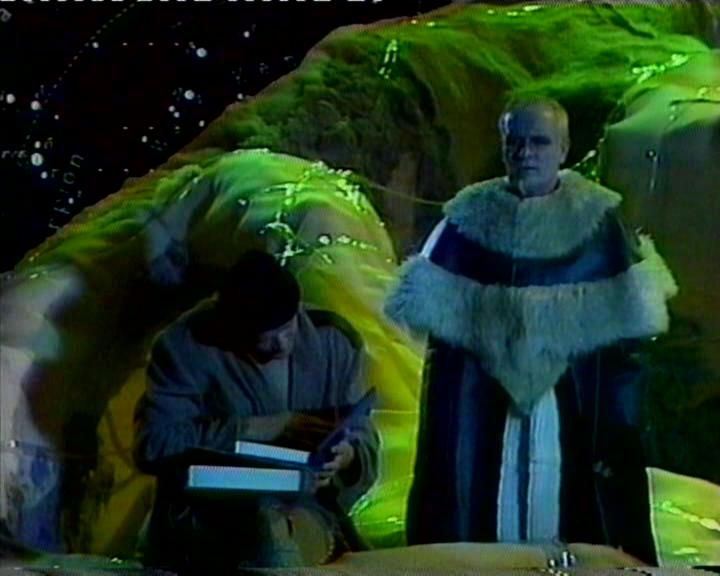
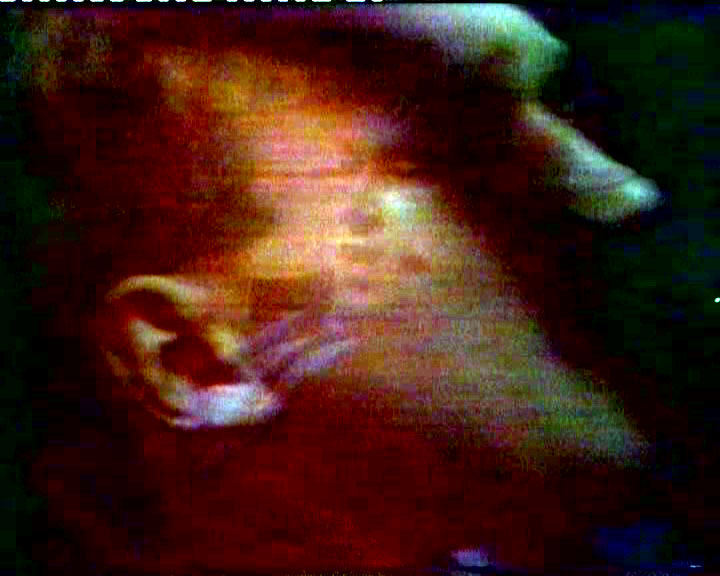
The multiple references to the fallible human body and the agonizing, troubled human mind establish a ground for this theatrical vision, to the composition of which Bódy adds one more visual and interpretive element. In a world where spies and traitors corrupt the state and everybody is eavesdropping, Hamlet’s stage of consciousness is also constructed as the cross-section of a huge ear. This mind-ear represents the all-penetrating insecurity and surveillance, but, at the same time, it also foregrounds the passing of the information through the ear to the consciousness of the character, the way, for example, in which Hamlet gets to know about the circumstances of his Father’s death. This information penetrates his mind through his ears in a fashion very similar to the way the poison entered his father’s body through the ear. Hamlet acts and moves within this space in a way which suggests that, simultaneously, he is passing through various chambers and compartments of his consciousness, through different „volumes of his brain”, as if he was in a private memory-theater which he constructed for himself to keep track of his duties and remembering. The anatomical presentation of this idea establishes a close connection between the tragedy and the new tropological – poststructuralist interest in the material foundations of signification, in the unmasterable materiality of the letter, the signifier, the symbol. The epistemological scrutiny is a leading motif of the play: Hamlet, who knows no seems, who has „that within which passes show”, tries to penetrate the surface of things in order to arrive at the authentic meaning of his identity and the world around himself. It is not only the meaning of the Ghost which is dubious for him, but everything concerning the supposedly divine and providential nature of the creation and the human being. This testing of the epistemological boundaries finally finds its target in the very materiality of the human being as well as that of language. The line „oh that this too, too sullied flesh would melt” is in the most organic relationship with Hamlet’s famous „words, words, words”: the materiality of the body and the materiality of language equally appear to conceal the immediacy of knowledge from the human being. Hamlet’s anatomical endeavor to dig down to the depths of both materialities results in a self-dissection which the great soliloquies take us through. This focus on the materiality of signification is emphasized when the Hamlet-actor (György Cserhalmi) is observing, feeling, caressing the pages and the very materiality of the books he is holding in his hands during the dialogue with Polonius, but, at the same time, the stage setting also directs our attention to the materiality of the human consciousness, as if the stage itself was „the volume of his brain.”
|
Labyrinth of Tunnels: the Stage as Brainstuff |
The Materiality of the Letter |
As has been noted, Bódy is careful to employ the vertical dimensionality which so importantly informed the world of the emblematic theater. A vertical framework is provided for the play by the omnipresence of the Ghost, who is supposed to dwell below but also appears from above, from the position which should be the seat of the divine providential protection as it is expected by the human being.
|
Vertical Dimensionality Up |
Vertical Dimensionality Down |

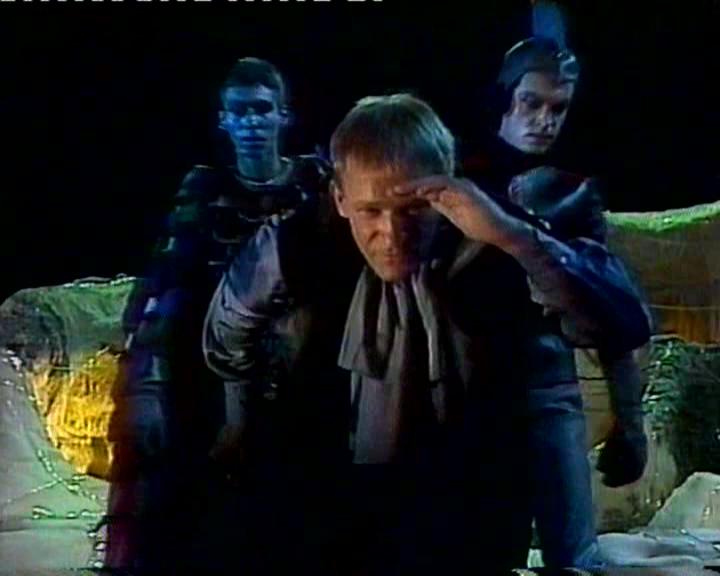
The inversion of the heaven – earth – underworld verticality results, just like in other early modern tragedies, in a feeling of insecurity and disorder that infiltrates the entire play. When the story of the Ghost penetrates Hamlet’s ears, Bódy employs the video-montage technique to represent how the character’s identity is shattered and decentered by this visual and auditory experience.
In the course of the play, the various movements and actions are represented in a way as if the different parts of the protagonist’s consciousness were activated and tested. Characters that fall will get entangled and locked up in Hamlet’s nerve fibers.
|
Montage: Corporeal and Mental Disintegration |
Ophelia Entangled |
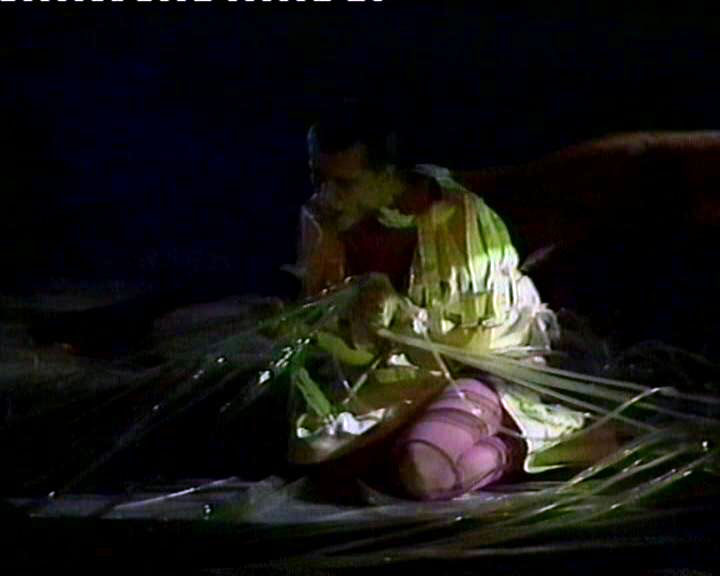
At the climactic point of the gravedigger scene, Hamlet arrives at a limit he is afraid to probe: the gravedigger offers him the skull to have a closer look at it. Hamlet does not dare to touch the emblem of death, but extends the shovel instead, lets the gravedigger place the skull on the instrument, and starts contemplating the horrid object from a safe distance.
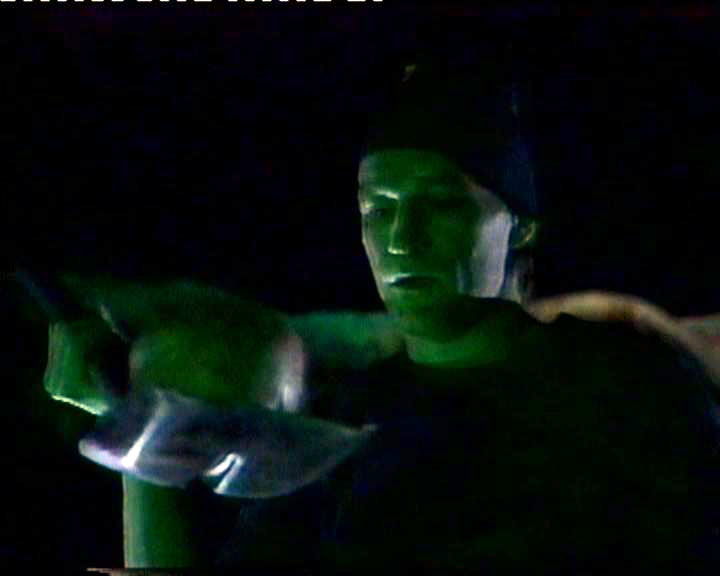
Memento Mori – Memento Mockery
The skull becomes a sign of the final destination in Hamlet’s journey of self-dissection. His poisoned and disintegrating consciousness, his body which he contemplates with contempt and his heterogeneous and decentered identity are all brought to a final realization in the face of this tangible, material presence of death. The realization is the one which is also proposed by Francis Barker in his reading of the drama. [8] After probing the frontiers and borderlines of meaning, Hamlet must realize that, in a world without transcendental guarantees and providential help, in the very depth of his subjectivity there is a great big vacuum, nothing else. This realization helps him overcome his inability to act, and to traverse the psychic resistance which renders him inert and hesitant. In psychoanalytical terms, he is willing and ready to come to terms with his unconscious, which is represented by his entry into the lower realm in the verticality of the play. When he cries out „This is I, Hamlet the Dane!”, at the very moment when he is willing to identify with the title of his diseased father, he stands at the mouth of the tunnel which represents Ophelia’s grave, the entry into the underworld, the passage to his unconscious.

Vertical Dimensionality Down: „This Is I, Hamlet, the Dane!”
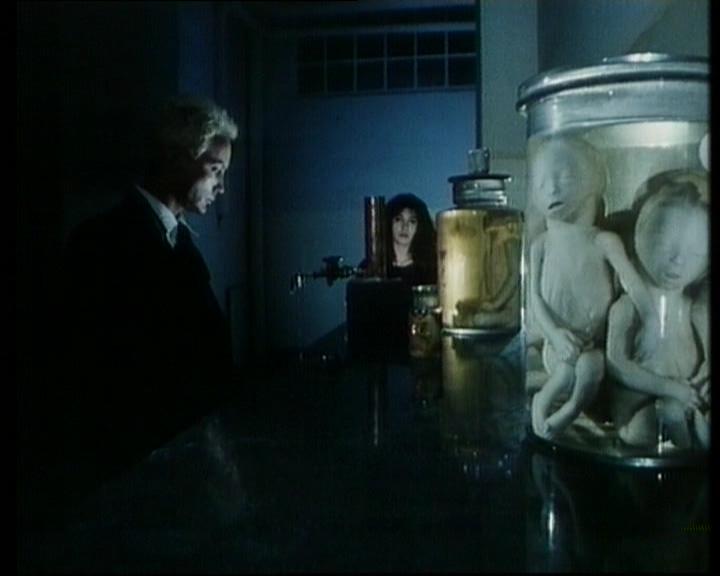
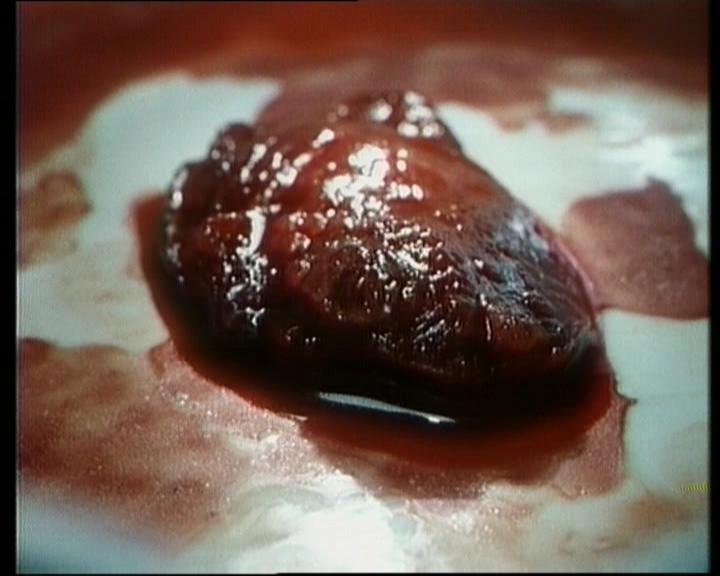
I believe the above considerations establish that Gábor Bódy’s stage production is a pioneering work which already anticipated the „corporeal turn” [9] of poststructuralist critical thinking which was to take place in early modern studies somewhat later. Gábor Bódy realized or anticipated several of the critical and interpretive attitudes and findings of the past twenty years. In his very influential cinematic achievements which were to come after the production of Hamlet, Bódy never gave up his corporeal interest, and, among other films, we keep encountering a persistent anatomization of the body in Psyché, perhaps his most complex and monumental direction.
In the film version of Hamlet, the montage technique, the metallic and artificial sound effects, the lighting and the system of camera perspectives all add to his original theatrical and cinematographic interpretation of the tragedy, an interpretation which observed the representational logic of verticality on the emblematic stage and the early modern traditions of anatomization, inwardness and epistemological experimentation. Returning to my original proposition about the logic of inversion on the early modern stage, I contend that Bódy’s ingenuity is also manifest in the way he uses and further develops this representational technique. He does employ the vertical directionalities in his production, and stretches out the underworld in the entire verticality of the play’s cosmos through the omnipresence of the Ghost’s agency, through „the embassy of death,” [10] which equally emanates from below and from above. At the same time, Bódy in his adaptation intensifies the anatomical nature of the play by producing one more „inversion.” By locating the entire play in Hamlet’s dissected and opened brain, he turns the tragedy of consciousness inside out: all the mental processes, all the onion-like layers and contents of consciousness are laid bare and visible, they are ostensibly foregrounded to the spectator as a representation, a reminder, a postmodern memento mori of our own heterogeneous materiality.
|
The Corporeal in Psyché |
The Body Turned Inside Out: The Abject in Psyché |
Jegyzetek
- [1] WICKHAM, Glynne, 1963. Early English Stages. 1300 to 1600. Volume Two 1576 to 1660, Part One. New York: Columbia University Press. ↩
- [2] WEIMANN, Robert, 1978. Shakespeare and the Popular Tradition in the Theater. Baltimore and London: The Johns Hopkins University Press. ↩
- [3] DESSEN, A., 1977. Elizabethan Drama and the Viewer’s Eye. University of North Carolina Press; 1982. Elizabethan Stage Conventions and Modern Interpreters. University of North Carolina Press; 1995. Recovering Shakespeare’s Theatrical Vocabulary. Cambridge University Press. ↩
- [4] NUNN, Hillary M., 2005. Staging Anatomies. Dissection and Spectacle in Early Stuart Tragedy. Ashgate. For the interrelated history of the early modern anatomy theater and public playhouses: HILLMAN, David and MAZZIO, Carla, eds. 1997. The Body in Parts: Fantasies of Corporeality in Early Modern Europe. London and New York: Routledge; MARSHALL, Cynthia, 2002. The Shattering of the Self: Violence, Subjectivity, and Early Modern Texts. Baltimore and London: The Johns Hopkins UP. ↩
- [5] SAWDAY, Jonathan, 1995. The Body Emblazoned: Dissection and the Human Body in Renaissance Culture. London and New York: Routledge. 110. ↩
- [6] „Not only his artistic creation but also his quite significant theoretical writings prove that Bódy was one of ↩
- [7] John Bayley introduces the term and applies it to three of Shakespeare’s great tragedies. „ […] Hamlet, Othello and Macbeth […] all enter and possess the mind and instantly become a part of it. Indeed, immensely realistic as they are, they seem to take place in an area of thinking, feeling and suffering.” BAYLEY, John, 1981. Shakespeare and Tragedy. London: Routledge and Kegan Paul. ↩
- [8] BARKER, Francis, 1984. The Tremulous Private Body: Essays on Subjection. London and New York: Methuen. ↩
- [9] [9] Cf. RUTHROF, Horst, 1977. Semantics and the Body. Meaning from Frege to the Postmodern. Toronto: University of Toronto Press. I think that this corporeal turn towards a „corposemantics”, as Ruthrof puts it, is at least as important in the poststructuralist critical scene as the all-determining linguistic turn earlier on, or the „visual turn” in mediality studies. ↩
- [10] KNIGHT, G. Wilson, 2001. „The Embassy of Death: An Essay on Hamlet.” In: The Wheel of Fire: Interpretations of Shakespearian Tragedy. London: Routledge, 2001. 17-49. ↩